
Monday, March 27, 2017
We are proud to announce that our newest sister store, Granbury Nissan will be opening soon and we are currently hiring ALL positions
. Please contact General Manager - Steve Goodman at sgoodman@lonestartoyota.com or Belinda Kelley at bkelley@waxautoplex.com today. You may also visit http://qoo.ly/eei7z and apply online - just remember to mention you are applying for the position at Granbury nissan in the text of the application - all positions are available!

Friday, March 10, 2017
2018 Toyota C-HR Shifts the CUV Paradigm With Stunning Style, Driving Dynamics and Versatility
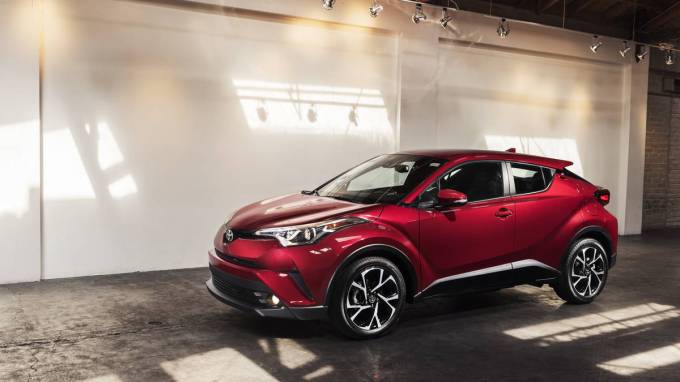
Stylish, athletic and filled with technology like Toyota Safety Sense P™ (TSS-P), the all-new 2018 Toyota C-HR – or, Coupe High-Rider – represents a leap forward in design, manufacturing and engineering for Toyota. When it arrives at dealerships this April, the C-HR will serve as a springboard of excitement and wanderlust for its trendsetting drivers.
First shown in concept form at the 2014 Paris Motor Show, the 2018 C-HR maintains the concept’s avant-garde physique; modern, comfortable cabin; and bold, outgoing character. The C-HR is available in two grades, XLE and XLE Premium, each equipped with a long list of standard features that includes 18-inch alloy wheels, dual-zone climate control, bucket seating, and 7-inch audio display.
 But, the C-HR doesn’t only look great – it’s got the sportiness to impress thanks to the efforts of Deputy Chief Engineer, Hiro Koba, who is a diehard racer with speed coursing through his veins. Koba-san and team made sure the C-HR exhilarates its driver anytime, anywhere, including around the famed Nürburgring circuit where vehicle development was chiefly executed. Like its uncanny looks, the C-HR’s blend of comfort, control, consistency, and responsiveness is extraordinarily impressive for the competitive paradigm it aims to shift.
Polished Diamond Style
Toyota’s team of global designers expounded on one theme: “Distinctive Diamond.” The iconic gemstone evokes universal notions of luxury, attractiveness, sophistication, and strength. Designers translated these traits into a physical form that’s collectively matchless, sexy, muscular, and edgy. From the get-go, they strived to sculpt an urban-dwelling crossover that would effortlessly navigate tight city streets and stand out, with an agile, dynamic expressiveness.
At the C-HR’s nose, two slim projector-beam halogen headlights with LED daytime running lights (DRL) and auto-on/off activation wrap deep into its toned shoulders – nearly all the way into the front quarter panels. Because of this, the vehicle looks wider than it is, and possesses an assertive fascia that’s uncommon in the segment. In fact, its dimensions – width (70.7 in.), height (61.6 in), length (171.2 in.), and wheelbase (103.9 in.) – can best be described as compact and neat. Its front and rear tracks match that of Toyota’s diehard sports car, 86, at 60.6 inches.
Deep, curvy character lines emerge from a prominent Toyota badge that’s flanked by the headlamps, and lead into the narrower core body. They run below the slender windows, and continue above the rear wheel where they marry to a high beltline and distinctive C-Pillar with hidden-type design door handle.
Look closely at the silhouette to see the clear resemblance of a diamond set on its side. Powerful arches housing the “vortex-styled” 18-inch tall by 7-inch wide aluminum wheels and 225/50R-18 all-season tires accentuate the C-HR’s sturdy posture.
The rear is a cohesive balance of its elaborate lines and 3D shapes. The tail lamps protrude outward, and the hatchback – outfitted with a lip spoiler and functional color-matched cantilevered wing – tapers neatly inboard, adding to the C-HR’s futuristic look, and, once more, imposing stance.
Toyota’s aerodynamicists pulled no punches when honing the C-HR’s 0.34 coefficient of drag. Canards on the rear quarter panels, front and rear spats, a streamlined rear lower bumper, and stabilizing fins integrated into the taillights all manage critical airflow in and around the body. Underneath, a bevy of rigid covers – on the engine, floor, fuel tank, and aft of the rear wheels – cull turbulence, and in doing so, help enhance vehicle control and fuel efficiency. At the rear, its aerodynamic details continue: The lower arms of the double-wishbone suspension have a streamline edge.
 The XLE Premium model expands on the XLE’s exterior traits with color-matched front and rear passenger door handles with touch-sensor lock and unlock capability, integrated front fog lights, plus, power side mirrors with turn signals, blind spot warning indicators, puddle lights with “Toyota C-HR” projection, and auto-folding functionality.
As one can imagine, the exterior color options are aplenty for C-HR. Available colors include Ruby Flare Pearl, Blizzard Pearl, Magnetic Gray Metallic, and Black Sand Pearl. Available all new-for-Toyota colors include Silver Knockout Metallic and Blue Eclipse Metallic.
For a bigger dose of individuality, the C-HR can be outfitted in R-Code, a special paintjob that pairs body color with a white-painted roof, side mirrors, and A-pillar for a truly custom look. Available pairings include Blue Eclipse Metallic R-Code, Ruby Flare Pearl R-Code, and Radiant Green Mica R-Code. Radiant Green Mica can only be had in R-Code configuration.
Cutting-Edge Cabin
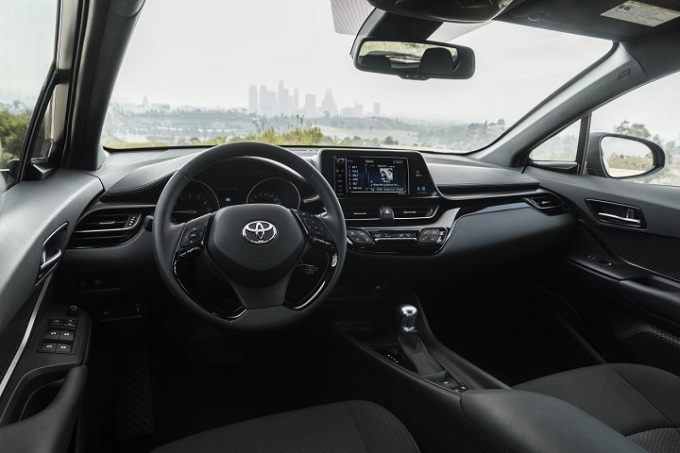
Open its doors to reveal a modern, spacious, and uncluttered interior having a keen placement of diamond accents and a driver-centric “MeZONE” orientation. Along with the soft-touch materials covering surfaces throughout, the diamond pattern influences the designs of the dual-zone climate controls, speaker surrounds, and black headliner above the front passengers. Passengers can easily converse thanks in large part to the acoustic noise-reducing front windshield.
Together with slim A-pillars, the slightly angled dashboard and amenity controls allow for the driver to have a clear view of the road ahead and intuitive access to instrumentation – a nod to the C-HR’s sports car influence. The 7-inch audio display is positioned centrally atop the dash, rather than in it, so as to help reduce a driver’s eye movements. An informative twin-ring gauge cluster resides behind the leather-wrapped multi-function steering wheel. The tilt/telescoping wheel, with its slender profile, small diameter, and compact center pad, is reminiscent of a sports car’s easy-to-grip helm. The satin-plated shift knob exudes a high-quality feeling, and once in-hand, has a solid shift movement. A bright 4.2-inch color Multi-Information Display (MID) sits between the twin-ring cluster and shows odometer, SPORT and ECO modes, outside temperature, fuel economy and trip information, fuel economy history, G-force monitor, and much more.
Key XLE standard features include all-black appointments; premium leather-wrapped steering wheel; auto-dimming rearview mirror with backup camera; electric parking brake; dual-zone climate control; and Sport Fabric-trimmed front bucket seats with sport bolsters and six-way adjustability. XLE Premium adds Blind Spot Monitor and Rear Cross Traffic Alert; heated front seats; eight-way adjustable power lumbar driver’s seat; and Smart Key System with Push Button Start. Both models are equipped with a six-speaker AM/FM/HD Radio™, Aha™ app, USB 2.0 port with iPod connectivity and control, AUX audio jack, Bluetooth® wireless connectivity, and Voice Recognition with voice training.
The C-HR receives two Toyota-first features: Driver Distraction Secure Audio (DDSA) and Brake Hold Function. DDSA prevents certain multimedia menus from being selected while the vehicle is in motion by complying with NHTSA’s Driver Distraction Guidelines. Brake Hold Function is a convenience feature that maintains braking force at all four wheels to keep the vehicle stationary when at a full stop. As a result, the vehicle will remain still even if the driver reduces the pressure on the brake pedal. Once the driver depresses the accelerator, brake pressure will release, and the vehicle will move forward.
Bolstered bucket seats help to keep passengers snug and comfortable. All passengers will appreciate the generous amount of small item storage space (sculpted in-door pockets) and cup holders (two front cup holders; two front, two rear bottle holders). Designers used scalloped seatbacks, foot well cubbies carved below the front seats, and a chamfered headliner to create a spacious backseat environment. Sound insulating materials placed on the carpet, headliner, A-pillars, and door trim help to keep all unwanted noises out and the good chats in.
For extra cargo carrying versatility, the rear 60/40 seat can split and fold flat, and, when in an upright position, can easily accommodate child seats with its LATCH (Lower Anchors and Tethers for Children) system. Seatback lock releases are positioned at shoulder height, making it possible to fold seats without bending over. The rear seats are designed so that seatbelts do not interfere when folding the seats. As an added bonus in the cargo hold, a hidden storage compartment located in the sidewall stores small items, as do compartments below the deck board. Everything in the trunk is concealed by a standard cargo cover.
Surprise Athlete
The Toyota C-HR scores high on style points, but it is also a hit when it comes to thrilling fun and impressive ride comfort. Deputy Chief Engineer Koba took full advantage of the C-HR’s adaptable Toyota New Global Architecture (TNGA) C-Platform to craft an engaging character that goes well beyond just a cool appearance. The C-HR’s core driving personality incorporates the ingredients of a well-sorted sports car – one that seamlessly melds cunning responsiveness, linearity, consistency, and comfort.
Years were spent developing on-road nimbleness and ride quality on some of the world’s most curvaceous and pitted roads, including the Nürburgring Nordschleife, an iconic racing circuit set in Germany’s Eifel mountains. Doing so took a mix of innovation and trial and error, and as a result, the TNGA C-platform – with an inherent low center-of-gravity, high strength, and low weight – benefitted from extra rigidity through added spot welding, gussets, braces, and adhesives in and on key connection structures.
The newly developed MacPherson strut front suspension with SACHS dampers has angled strut bearings and a large diameter stabilizer bar to help the C-HR’s front end respond quickly and precisely at initial corner turn-in. And at the rear, an all-new double-wishbone suspension utilizes a 26-mm stabilizer bar and SACHS dampers with urethane upper supports – a first for Toyota. The material, together with an aluminum-cast upper support housing, aids in the dampers’ absorption efficiency, and therefore, greatly benefit passenger comfort, cabin quietness, and vehicle agility.
Feeling connected to the road is characteristic of a sporty drive, and the C-HR delivers with its column-type Electronic Power Steering (EPS) system. As is the case with other EPS systems, a tilt of the steering wheel will return light feedback at low speeds, and at higher speeds, drivers will notice stronger feedback for increased confidence while behind the wheel. The C-HR’s steering system’s feel, however, relies on a highly rigid rack-and-pinion steering gearbox that is installed directly to the front suspension. Braking is handled brilliantly by a pairing of 11.7-inch front ventilated discs with 11.1-inch rear solid discs.
For all of its sportiness, the C-HR’s ride quality is well-sorted, civilized, and highly capable in absorbing the nastiest of untidy pavement. In the end, the C-HR happily finds itself at home on congested boulevards as it does on serpentine roads.
Compact Punch
The C-HR’s engine, a punchy 2.0-liter four-cylinder dual-overhead cam producing 144 horsepower at 6,100 rpm and 139 pound-feet of torque at 3,900 rpm, sends all power to the front wheels via the Continuously Variable Transmission with intelligence and Shift mode (CVTi-S). The engine employs many of Toyota’s latest generation of technologies, including Variable Valve Timing (VVT) and Valvematic, both of which have received extensive optimization to enhance fuel economy and smooth operation. Valvematic offers a broader range of continuously variable valve timing (lift and phasing) to provide optimal intake valve (not on exhaust side) operation relative to engine demands. Furthermore, to reduce exhaust emissions, the catalyst is warmed earlier during the engine’s ignition cycle. Both models are expected to receive EPA-estimates of 27 city/31 highway/29 combined miles-per-gallon.
The all-new the CVTi-S received much attention by engineers and utilizes redesigned pulleys to enhance acceleration and fuel economy; a new belt structure to reduce cabin noise; and a coaxial two-port oil pump system that allows for continuous oil pressure modifications in various driving conditions. A Preload Differential helps to distribute torque between the left and right wheels during low-speed operation to make for easier, composed driving.
Of course, drivers and passengers will welcome the powertrain’s well-sorted nature, but they’ll love Sport mode and the simulated 7-speed Sequential Shiftmatic. Engaging Sport mode via the MID increases the responsiveness of the throttle, quickens the CVT’s automatic artificial “step-up” shifts, and maintains high engine speed to enhance acceleration. The EPS’ feedback is weightier for a more confidence-inspiring feel. Pushing the gearshift over to the left while in Drive engages Sequential Shiftmatic, and lets drivers shift simulated gears at their convenience.
Stateof-the-Art Safety
The C-HR comes equipped with standard Toyota Safety Sense P™ (TSS-P). It is anticipated to be the only vehicle in its segment with standard Pre-Collision System with Active Braking. It is also expected to be the only vehicle in the compact crossover market with Full-Speed Range Dynamic Radar Cruise Control as standard equipment.
TSS-P is a multi-feature advanced active safety suite that bundles Pre-Collision System with Pedestrian Detection function (PCS w/PD) featuring forward collision warning and Automatic Emergency Braking; Lane Departure Alert with Steering Assist function (LDA w/SA); Automatic High Beams (AHB); and Full-Speed Range Dynamic Radar Cruise Control (DRCC).
The Pre-Collision System with Pedestrian Detection (PCS w/PD) uses a camera and radar to detect a vehicle and/or pedestrian ahead of the C-HR in certain conditions. When the system determines there is a possibility of collision, it prompts the driver to brake with an audio and visual alert. If the driver notices the hazard and brakes, the system may provide additional braking force using Brake Assist. If the driver fails to brake in a set time and the system determines that the risk of collision with a vehicle and/or pedestrian is extremely high, the system may automatically apply the brakes, reducing speed in order to help the driver avoid the collision or reducing the impact.
Lane Departure Alert (LDA) with Steering Assist function uses an in-vehicle camera designed to detect visible white and yellow lane markers in front of the vehicle and the vehicle’s position on the road. If the system determines that the vehicle is starting to unintentionally deviate from its lane, the system alerts the driver with an audio and visual alert. When the alerts occur, the driver must check the surrounding road situation and carefully operate the steering wheel to move the vehicle back to the center part of their lane.
In addition to the alert function of LDA, the C-HR will feature a Steering Assist function. If the system determines that the vehicle is on a path to unintentionally depart from its lane, the system may provide small corrective steering inputs to the steering wheel for a short period of time to help the driver keep the vehicle in its lane.
On highways, Full-Speed Range Dynamic Radar Cruise Control (DRCC) functions similar to conventional “constant speed” cruise control in that it helps vehicles travel at a consistent speed set by the driver, but this system adds a vehicle-to-vehicle distance control mode designed to assist the driver by adjusting vehicle speed to help maintain a pre-set distance to a preceding vehicle when the preceding vehicle is traveling at a lower speed. Once a vehicle speed is set by the driver, Full-Speed Range DRCC uses a front-grill mounted millimeter-wave radar and an in-vehicle camera designed to detect a preceding vehicle and help determine its distance.
If the vehicle ahead is detected traveling at a speed slower than your set speed or within your distance range setting, the system is designed to automatically decelerate the vehicle without having to cancel the cruise control. When a greater reduction in vehicle speed is necessary, the system may apply the brakes and operate the vehicle brake lights. The system will then respond to changes in the speed of the vehicle ahead in order to help maintain the vehicle-to-vehicle distance set by the driver. When there is no longer a preceding vehicle driving slower than the vehicle’s set speed, the system accelerates until the set speed is reached and returns to the pre-set speed cruising. Full-Speed Range DRCC is designed to function at approximately 0 to 110 mph, and may enable low speed following, speed matching, stopping, and acceleration/deceleration to a preceding vehicle.
Automatic High Beams (AHB) helps enhance forward visibility during nighttime driving. It uses a camera to detect the headlights of oncoming vehicles and the tail lights of vehicles ahead, and then automatically switches between high beams and low beams so as not to interfere with other drivers.
Complementing TSS-P are 10 standard airbags, standard Hill-Start Assist Control (HAC) and rear backup camera, as well as available Blind Spot Monitor with Rear Cross Traffic Alert, which are only available on the XLE Premium model.
First shown in concept form at the 2014 Paris Motor Show, the 2018 C-HR maintains the concept’s avant-garde physique; modern, comfortable cabin; and bold, outgoing character. The C-HR is available in two grades, XLE and XLE Premium, each equipped with a long list of standard features that includes 18-inch alloy wheels, dual-zone climate control, bucket seating, and 7-inch audio display.
But, the C-HR doesn’t only look great – it’s got the sportiness to impress thanks to the efforts of Deputy Chief Engineer, Hiro Koba, who is a diehard racer with speed coursing through his veins. Koba-san and team made sure the C-HR exhilarates its driver anytime, anywhere, including around the famed Nürburgring circuit where vehicle development was chiefly executed. Like its uncanny looks, the C-HR’s blend of comfort, control, consistency, and responsiveness is extraordinarily impressive for the competitive paradigm it aims to shift.Polished Diamond Style
Toyota’s team of global designers expounded on one theme: “Distinctive Diamond.” The iconic gemstone evokes universal notions of luxury, attractiveness, sophistication, and strength. Designers translated these traits into a physical form that’s collectively matchless, sexy, muscular, and edgy. From the get-go, they strived to sculpt an urban-dwelling crossover that would effortlessly navigate tight city streets and stand out, with an agile, dynamic expressiveness.
At the C-HR’s nose, two slim projector-beam halogen headlights with LED daytime running lights (DRL) and auto-on/off activation wrap deep into its toned shoulders – nearly all the way into the front quarter panels. Because of this, the vehicle looks wider than it is, and possesses an assertive fascia that’s uncommon in the segment. In fact, its dimensions – width (70.7 in.), height (61.6 in), length (171.2 in.), and wheelbase (103.9 in.) – can best be described as compact and neat. Its front and rear tracks match that of Toyota’s diehard sports car, 86, at 60.6 inches.
Deep, curvy character lines emerge from a prominent Toyota badge that’s flanked by the headlamps, and lead into the narrower core body. They run below the slender windows, and continue above the rear wheel where they marry to a high beltline and distinctive C-Pillar with hidden-type design door handle.
Look closely at the silhouette to see the clear resemblance of a diamond set on its side. Powerful arches housing the “vortex-styled” 18-inch tall by 7-inch wide aluminum wheels and 225/50R-18 all-season tires accentuate the C-HR’s sturdy posture.
The rear is a cohesive balance of its elaborate lines and 3D shapes. The tail lamps protrude outward, and the hatchback – outfitted with a lip spoiler and functional color-matched cantilevered wing – tapers neatly inboard, adding to the C-HR’s futuristic look, and, once more, imposing stance.
Toyota’s aerodynamicists pulled no punches when honing the C-HR’s 0.34 coefficient of drag. Canards on the rear quarter panels, front and rear spats, a streamlined rear lower bumper, and stabilizing fins integrated into the taillights all manage critical airflow in and around the body. Underneath, a bevy of rigid covers – on the engine, floor, fuel tank, and aft of the rear wheels – cull turbulence, and in doing so, help enhance vehicle control and fuel efficiency. At the rear, its aerodynamic details continue: The lower arms of the double-wishbone suspension have a streamline edge.
The XLE Premium model expands on the XLE’s exterior traits with color-matched front and rear passenger door handles with touch-sensor lock and unlock capability, integrated front fog lights, plus, power side mirrors with turn signals, blind spot warning indicators, puddle lights with “Toyota C-HR” projection, and auto-folding functionality.As one can imagine, the exterior color options are aplenty for C-HR. Available colors include Ruby Flare Pearl, Blizzard Pearl, Magnetic Gray Metallic, and Black Sand Pearl. Available all new-for-Toyota colors include Silver Knockout Metallic and Blue Eclipse Metallic.
For a bigger dose of individuality, the C-HR can be outfitted in R-Code, a special paintjob that pairs body color with a white-painted roof, side mirrors, and A-pillar for a truly custom look. Available pairings include Blue Eclipse Metallic R-Code, Ruby Flare Pearl R-Code, and Radiant Green Mica R-Code. Radiant Green Mica can only be had in R-Code configuration.
Cutting-Edge Cabin
Open its doors to reveal a modern, spacious, and uncluttered interior having a keen placement of diamond accents and a driver-centric “MeZONE” orientation. Along with the soft-touch materials covering surfaces throughout, the diamond pattern influences the designs of the dual-zone climate controls, speaker surrounds, and black headliner above the front passengers. Passengers can easily converse thanks in large part to the acoustic noise-reducing front windshield.
Together with slim A-pillars, the slightly angled dashboard and amenity controls allow for the driver to have a clear view of the road ahead and intuitive access to instrumentation – a nod to the C-HR’s sports car influence. The 7-inch audio display is positioned centrally atop the dash, rather than in it, so as to help reduce a driver’s eye movements. An informative twin-ring gauge cluster resides behind the leather-wrapped multi-function steering wheel. The tilt/telescoping wheel, with its slender profile, small diameter, and compact center pad, is reminiscent of a sports car’s easy-to-grip helm. The satin-plated shift knob exudes a high-quality feeling, and once in-hand, has a solid shift movement. A bright 4.2-inch color Multi-Information Display (MID) sits between the twin-ring cluster and shows odometer, SPORT and ECO modes, outside temperature, fuel economy and trip information, fuel economy history, G-force monitor, and much more.
Key XLE standard features include all-black appointments; premium leather-wrapped steering wheel; auto-dimming rearview mirror with backup camera; electric parking brake; dual-zone climate control; and Sport Fabric-trimmed front bucket seats with sport bolsters and six-way adjustability. XLE Premium adds Blind Spot Monitor and Rear Cross Traffic Alert; heated front seats; eight-way adjustable power lumbar driver’s seat; and Smart Key System with Push Button Start. Both models are equipped with a six-speaker AM/FM/HD Radio™, Aha™ app, USB 2.0 port with iPod connectivity and control, AUX audio jack, Bluetooth® wireless connectivity, and Voice Recognition with voice training.
The C-HR receives two Toyota-first features: Driver Distraction Secure Audio (DDSA) and Brake Hold Function. DDSA prevents certain multimedia menus from being selected while the vehicle is in motion by complying with NHTSA’s Driver Distraction Guidelines. Brake Hold Function is a convenience feature that maintains braking force at all four wheels to keep the vehicle stationary when at a full stop. As a result, the vehicle will remain still even if the driver reduces the pressure on the brake pedal. Once the driver depresses the accelerator, brake pressure will release, and the vehicle will move forward.
Bolstered bucket seats help to keep passengers snug and comfortable. All passengers will appreciate the generous amount of small item storage space (sculpted in-door pockets) and cup holders (two front cup holders; two front, two rear bottle holders). Designers used scalloped seatbacks, foot well cubbies carved below the front seats, and a chamfered headliner to create a spacious backseat environment. Sound insulating materials placed on the carpet, headliner, A-pillars, and door trim help to keep all unwanted noises out and the good chats in.
For extra cargo carrying versatility, the rear 60/40 seat can split and fold flat, and, when in an upright position, can easily accommodate child seats with its LATCH (Lower Anchors and Tethers for Children) system. Seatback lock releases are positioned at shoulder height, making it possible to fold seats without bending over. The rear seats are designed so that seatbelts do not interfere when folding the seats. As an added bonus in the cargo hold, a hidden storage compartment located in the sidewall stores small items, as do compartments below the deck board. Everything in the trunk is concealed by a standard cargo cover.
Surprise Athlete
The Toyota C-HR scores high on style points, but it is also a hit when it comes to thrilling fun and impressive ride comfort. Deputy Chief Engineer Koba took full advantage of the C-HR’s adaptable Toyota New Global Architecture (TNGA) C-Platform to craft an engaging character that goes well beyond just a cool appearance. The C-HR’s core driving personality incorporates the ingredients of a well-sorted sports car – one that seamlessly melds cunning responsiveness, linearity, consistency, and comfort.
Years were spent developing on-road nimbleness and ride quality on some of the world’s most curvaceous and pitted roads, including the Nürburgring Nordschleife, an iconic racing circuit set in Germany’s Eifel mountains. Doing so took a mix of innovation and trial and error, and as a result, the TNGA C-platform – with an inherent low center-of-gravity, high strength, and low weight – benefitted from extra rigidity through added spot welding, gussets, braces, and adhesives in and on key connection structures.
The newly developed MacPherson strut front suspension with SACHS dampers has angled strut bearings and a large diameter stabilizer bar to help the C-HR’s front end respond quickly and precisely at initial corner turn-in. And at the rear, an all-new double-wishbone suspension utilizes a 26-mm stabilizer bar and SACHS dampers with urethane upper supports – a first for Toyota. The material, together with an aluminum-cast upper support housing, aids in the dampers’ absorption efficiency, and therefore, greatly benefit passenger comfort, cabin quietness, and vehicle agility.
Feeling connected to the road is characteristic of a sporty drive, and the C-HR delivers with its column-type Electronic Power Steering (EPS) system. As is the case with other EPS systems, a tilt of the steering wheel will return light feedback at low speeds, and at higher speeds, drivers will notice stronger feedback for increased confidence while behind the wheel. The C-HR’s steering system’s feel, however, relies on a highly rigid rack-and-pinion steering gearbox that is installed directly to the front suspension. Braking is handled brilliantly by a pairing of 11.7-inch front ventilated discs with 11.1-inch rear solid discs.
For all of its sportiness, the C-HR’s ride quality is well-sorted, civilized, and highly capable in absorbing the nastiest of untidy pavement. In the end, the C-HR happily finds itself at home on congested boulevards as it does on serpentine roads.
Compact Punch
The C-HR’s engine, a punchy 2.0-liter four-cylinder dual-overhead cam producing 144 horsepower at 6,100 rpm and 139 pound-feet of torque at 3,900 rpm, sends all power to the front wheels via the Continuously Variable Transmission with intelligence and Shift mode (CVTi-S). The engine employs many of Toyota’s latest generation of technologies, including Variable Valve Timing (VVT) and Valvematic, both of which have received extensive optimization to enhance fuel economy and smooth operation. Valvematic offers a broader range of continuously variable valve timing (lift and phasing) to provide optimal intake valve (not on exhaust side) operation relative to engine demands. Furthermore, to reduce exhaust emissions, the catalyst is warmed earlier during the engine’s ignition cycle. Both models are expected to receive EPA-estimates of 27 city/31 highway/29 combined miles-per-gallon.
The all-new the CVTi-S received much attention by engineers and utilizes redesigned pulleys to enhance acceleration and fuel economy; a new belt structure to reduce cabin noise; and a coaxial two-port oil pump system that allows for continuous oil pressure modifications in various driving conditions. A Preload Differential helps to distribute torque between the left and right wheels during low-speed operation to make for easier, composed driving.
Of course, drivers and passengers will welcome the powertrain’s well-sorted nature, but they’ll love Sport mode and the simulated 7-speed Sequential Shiftmatic. Engaging Sport mode via the MID increases the responsiveness of the throttle, quickens the CVT’s automatic artificial “step-up” shifts, and maintains high engine speed to enhance acceleration. The EPS’ feedback is weightier for a more confidence-inspiring feel. Pushing the gearshift over to the left while in Drive engages Sequential Shiftmatic, and lets drivers shift simulated gears at their convenience.
Stateof-the-Art Safety
The C-HR comes equipped with standard Toyota Safety Sense P™ (TSS-P). It is anticipated to be the only vehicle in its segment with standard Pre-Collision System with Active Braking. It is also expected to be the only vehicle in the compact crossover market with Full-Speed Range Dynamic Radar Cruise Control as standard equipment.
TSS-P is a multi-feature advanced active safety suite that bundles Pre-Collision System with Pedestrian Detection function (PCS w/PD) featuring forward collision warning and Automatic Emergency Braking; Lane Departure Alert with Steering Assist function (LDA w/SA); Automatic High Beams (AHB); and Full-Speed Range Dynamic Radar Cruise Control (DRCC).
The Pre-Collision System with Pedestrian Detection (PCS w/PD) uses a camera and radar to detect a vehicle and/or pedestrian ahead of the C-HR in certain conditions. When the system determines there is a possibility of collision, it prompts the driver to brake with an audio and visual alert. If the driver notices the hazard and brakes, the system may provide additional braking force using Brake Assist. If the driver fails to brake in a set time and the system determines that the risk of collision with a vehicle and/or pedestrian is extremely high, the system may automatically apply the brakes, reducing speed in order to help the driver avoid the collision or reducing the impact.
Lane Departure Alert (LDA) with Steering Assist function uses an in-vehicle camera designed to detect visible white and yellow lane markers in front of the vehicle and the vehicle’s position on the road. If the system determines that the vehicle is starting to unintentionally deviate from its lane, the system alerts the driver with an audio and visual alert. When the alerts occur, the driver must check the surrounding road situation and carefully operate the steering wheel to move the vehicle back to the center part of their lane.
In addition to the alert function of LDA, the C-HR will feature a Steering Assist function. If the system determines that the vehicle is on a path to unintentionally depart from its lane, the system may provide small corrective steering inputs to the steering wheel for a short period of time to help the driver keep the vehicle in its lane.
On highways, Full-Speed Range Dynamic Radar Cruise Control (DRCC) functions similar to conventional “constant speed” cruise control in that it helps vehicles travel at a consistent speed set by the driver, but this system adds a vehicle-to-vehicle distance control mode designed to assist the driver by adjusting vehicle speed to help maintain a pre-set distance to a preceding vehicle when the preceding vehicle is traveling at a lower speed. Once a vehicle speed is set by the driver, Full-Speed Range DRCC uses a front-grill mounted millimeter-wave radar and an in-vehicle camera designed to detect a preceding vehicle and help determine its distance.
If the vehicle ahead is detected traveling at a speed slower than your set speed or within your distance range setting, the system is designed to automatically decelerate the vehicle without having to cancel the cruise control. When a greater reduction in vehicle speed is necessary, the system may apply the brakes and operate the vehicle brake lights. The system will then respond to changes in the speed of the vehicle ahead in order to help maintain the vehicle-to-vehicle distance set by the driver. When there is no longer a preceding vehicle driving slower than the vehicle’s set speed, the system accelerates until the set speed is reached and returns to the pre-set speed cruising. Full-Speed Range DRCC is designed to function at approximately 0 to 110 mph, and may enable low speed following, speed matching, stopping, and acceleration/deceleration to a preceding vehicle.
Automatic High Beams (AHB) helps enhance forward visibility during nighttime driving. It uses a camera to detect the headlights of oncoming vehicles and the tail lights of vehicles ahead, and then automatically switches between high beams and low beams so as not to interfere with other drivers.
Complementing TSS-P are 10 standard airbags, standard Hill-Start Assist Control (HAC) and rear backup camera, as well as available Blind Spot Monitor with Rear Cross Traffic Alert, which are only available on the XLE Premium model.
Stay tuned to Lone Star Toyota of Lewisville for all the latest Toyota news.
Friday, February 17, 2017
Visit the Lone Star Toyota of Lewisville for the best deals & service for all of your automotive needs

Monday, January 23, 2017
2017 Toyota Sienna
If you and yours are in the
hunt for a people mover that offers a quiet, comfortable ride, lots of room and
has surprising power, then put the new very popular Toyota Sienna at the top of
your list. Another plus is that the
Sienna is the only minivan that offers All-Wheel-Drive for those who appreciate
stability and control in nasty road conditions.
One in your favorite color and style is waiting for your up close and
personal attention with the friendly folks at Lone Star Toyota of Lewisville.

At first glance, you will be
impressed with the Sienna's sporty looking style in its wide and assertive
stance, but the Sienna is much more than a pretty face. Under its handsome slanting hood lives a new
four-cam 3.5-liter V6 that punches out close to 300 lively horses and an
asphalt gripping 263 lb-ft of torque.
This Toyota family mover is the fastest in its class as you and yours
can reach 60mph in seven seconds flat and a quick 3.8 seconds from 30-50 mph
which is super for passing conditions.
This power-plant has a variable intake and exhaust value timing yield at
a 4700 rpm torque peak which is indeed racy for a minivan. The Sienna is also mated with a new smooth
shifting eight speed automatic transmission; everything just comes together for
that “get up and go”. This is what you
will experience and be pleasantly surprised on how quick it comes off the line
when you take your test drive.
Also, in that enjoyable quiet
drive you will appreciate how roomy the Sienna's cabin is and how it is just
bursting with an upscale interior loaded with premium features. This well-appointed interior is what Toyota
is famous for since they know that is where you spend your drive times, so why
not experience a fun and quiet time. The
seating is very comfortable and will hold up to eight people and their stuff. What keeps parents at ease is the impressive
setup of safety systems and entertainment for the children. This Sienna also has four LATCH locations,
including lower anchors on the outboard second row seats, passenger side and
center third row seats. Toyota takes
passenger safety seriously along with an abundance of available safety
features.

The dashboard is equipped with
high quality and tech superior systems that relate to your entertainment,
communication and safety desires. The
Sienna comes standard with a rear view camera, Bluetooth, Tri-zone automatic
climate control and Toyota's easy to learn infotainment system. The optional list is also long with available
safety features, Blue-ray, upgraded Entune infotainment system with a
seven-inch screen, moonroof, navigation and more.
The new 2017 Toyota comes in
five models: L, LE, SE, XLE and the gorgeous luxurious Limited. All models come with the upgraded feisty V6
and the new eight-speed automatic. There
is a Sienna for just about anyone's budget and styling. Do take that short drive to Lone Star Toyota and
be prepared for an enjoyable time. The
bet is on that you will leave with a smile, not only because you brought back
the “fun factor” in your drive times, but also for the great deal you received.
Friday, January 20, 2017
Please join us in showing the Little Elm Police Department our support.

Please join us in showing the Little Elm Police Department our support. One of their own, Detective Jerry Walker was killed in the line of duty on Tuesday, January 27th while responding to a 911 call in Little Elm. As a special initiative to raise money for the Little Elm PD, Lone Star Toyota will donate a portion of every vehicle sold from Friday January 20th through Saturday, January 28th.
DFW Tundra Crew has set up a special PayPal Account in which ALL PROCEEDS will be given to the Little Elm PD and Lone Star Toyota will match all donated funds. Please send any donations through PayPal at walkermemorialcruise@gmail.com
Friday, December 30, 2016
2017 Toyota Tundra SR5 4.6L V8
The full-size pickup truck is an unabashedly and proudly American creation. Baseball, apple pie, pickup trucks, etc. So it is perhaps understandable, then, that the 2016 Toyota Tundra finds itself at a disadvantage compared to the full-size trucks from Ford, GM and Ram. But it's actually not because the Tundra is from a Japanese company (though it's built in Texas).
Age has a lot to do with it. The Tundra underwent a thorough update two years ago that brought revised styling, an improved cabin and updated features, but it was largely akin to a kitchen remodel as compared to breaking out the wrecking ball and fully rebuilding up from the foundation. The revisions just weren't enough to fix flaws or make notable advances. In contrast, the Ford F-150 now has a lightweight aluminum body and turbocharged engines, and the Ram 1500 has a smooth-riding coil spring suspension and efficient turbodiesel V6. The recently redesigned Chevrolet Silverado wasn't especially innovative, but its incremental improvements in just about every vehicular facet have allowed it to soundly keep up with the Joneses.

In all fairness, the Tundra does indeed offer truck buyers an awful lot to value. Its double cab is one of the more spacious extended cabs on the market, while the CrewMax is legitimately sprawl-out comfortable, with not only copious legroom but also the added comfort of a reclining seatback. Those interested in venturing off road would also be wise to consider the capable TRD Pro trim level.
Yet, for the most part, the Edmunds "B"-rated 2016 Toyota Tundra quite simply falls short of the current crop of top-notch pickups: the "A"-rated Ram 1500 and Ford F-150, as well as the Chevy Silverado and GMC Sierra. The 2016 Nissan Titan XD, with its diesel-powered engine, also promises a degree of innovation the Tundra lacks and may stand a better chance of countering the argument that only American companies can build such a quintessentially American vehicle.
Depending on which configuration you choose, there are six trim levels for the Tundra: SR, SR5, Limited, Platinum, 1794 Edition and TRD Pro. The availability of some options or packages can vary based on the region in which you live.
The base SR (regular and double cab only) comes standard with 18-inch steel wheels, full power accessories, keyless entry, heated mirrors, a windshield wiper de-icer, a damped tailgate, air-conditioning, cruise control, a rearview camera, 40/20/40 bench seat, cloth upholstery, a tilt-only steering wheel, Bluetooth phone and audio connectivity, and a six-speaker sound system with a 6.1-inch touchscreen interface, a CD player, an auxiliary audio jack, a USB port and a media player interface. The SR Work Truck package removes the power locks and windows, and replaces the cloth upholstery and carpet with vinyl.
Going with the SR5 (double cab and CrewMax only) gets you foglights, exterior chrome trim, variable intermittent windshield wipers and an upgraded tech interface that includes a 7-inch touchscreen, HD and satellite radios, traffic information and a navigation app. The CrewMax adds a power opening rear window and an overhead console. The SR5 Upgrade package adds front bucket seats that include a power height-adjustable driver seat and lumbar adjustment, a center console (with storage and "floor" shifter), a tilt-and-telescoping steering wheel, an auto-dimming rearview mirror, and a larger gas tank when equipped with the 5.7-liter V8. To that package, the Safety & Convenience package adds front and rear parking sensors, a blind-spot warning system and rear cross-traffic alert. Eighteen-inch alloy wheels can be added as a stand-alone option.
The TRD Pro includes the SR5 Upgrade items plus unique styling elements, black 18-inch alloy wheels, off-road tires, an off-road suspension that includes Bilstein shock absorbers, four movable bed tie-down cleats, an eight-way power driver seat, a four-way power passenger seat, leather upholstery with TRD logo and red stitching, an upgraded 7-inch touchscreen (optional on SR5), a navigation system and additional speakers (seven double cab, nine CrewMax).
The Limited (double and CrewMax only) adds to the base and Upgrade SR5 equipment automatic headlights, 20-inch alloy wheels, the tie-down cleats, automatic dual-zone climate control, an eight-way power driver seat, a four-way power passenger seat, leather upholstery, a leather-wrapped steering wheel, a power-sliding horizontal rear window (double cab), an upgraded 7-inch touchscreen, a navigation system and additional speakers (seven double cab, nine CrewMax). The Limited Premium package adds the Safety & Convenience items plus extra interior lighting and anti-theft alarm features. A sunroof is optional on the CrewMax.
At the top of the food chain, the Platinum (CrewMax only) comes standard with the Safety & Convenience items and builds on the Limited's equipment with LED running lights, power-folding and auto-dimming mirrors, a sunroof, distinctive 20-inch wheels and styling elements, heated and ventilated power front seats (10-way driver, six-way passenger), driver memory functions and a 12-speaker JBL sound system (optional on the Limited CrewMax).
The 1794 Edition really only differs from the Platinum in terms of its distinctive exterior and interior styling elements.
The TRD Off-Road package can be added to the SR5, Limited and 1794 Edition. It includes 18-inch TRD wheels, off-road tires, trail-tuned shock absorbers, skid plates and tow hooks.
Stand-alone options on most trim levels include heated tow mirrors and running boards.

For SR double cab models and all SR5 models, a 4.6-liter V8 comes standard, producing 310 horsepower and 327 pound feet of torque. EPA-estimated fuel economy is 16 mpg combined (15 city/19 highway) on 2WD models; 4WD versions also rate 16 mpg combined (14/18). Maximum towing capacity with the 4.6-liter engine is between 6,400 and 6,800 pounds depending on body style.
A 5.7-liter V8 is standard on the regular cab and all variations of the Limited, Platinum, 1794 and TRD Pro. It is optional on SR5 trims. It produces 381 hp and 401 lb-ft of torque. EPA fuel economy estimates are 15 mpg (13/18) with 2WD and 15 (13/17) with 4WD. A tow package is standard on all Tundras equipped with the 5.7-liter V8. Depending on body style, maximum towing capacity is between 9,800 and 10,500 pounds.
In Edmunds testing, a Tundra 1794 with four-wheel drive accelerated from zero to 60 mph in 6.8 seconds, while a Tundra TRD Pro did it in 6.7 seconds. These are both quick, yet average times for the segment.
In government crash testing, the Tundra received four out of five stars for overall and frontal crash protection, and five stars for side protection. The Insurance Institute for Highway Safety gave the Tundra Double Cab its top rating of "Good" in the moderate front overlap, side and roof strength tests. Its seat and head restraint design also received a "Good" rating for whiplash protection in rear impacts.
During an Edmunds braking test, a Tundra 1794 with 4WD came to a stop from 60 mph in 130 feet, which is about average for the segment. A 4WD TRD Pro took 134 feet, which isn't much farther, even considering its all-terrain tires.
The front seats in every trim are broad and comfortable, but it's in the backseat where the Tundra enjoys advantages over most. There is a considerable amount of legroom even in the double cab, while the CrewMax boasts a vast amount of stretch-out space and the unique ability to recline the seat. The folding rear seats in double cabs and CrewMax models also provide a good amount of protected storage for valuable items you'd rather not leave in the bed.

The Tundra's light steering makes parking lot maneuvers easy, but it's not especially confidence-inspiring when operating at higher speeds, and contributes to the Tundra feeling bigger and more unwieldy than competing trucks (which are plenty big and unwieldy as it is). The Tundra's main demerit, however, is its ride quality. In order to haul and tow as much as possible without the need for special packages, axle ratios or separate heavy-duty models, the Tundra's suspension has been stiffened to the point that occupants feel every single bump and rut. The jostling and borderline harshness only get worse with the optional 20-inch wheels, and in general, the Tundra feels decidedly old-school at a time when its competitors (especially the Ram) have improved dramatically in this area.
Age has a lot to do with it. The Tundra underwent a thorough update two years ago that brought revised styling, an improved cabin and updated features, but it was largely akin to a kitchen remodel as compared to breaking out the wrecking ball and fully rebuilding up from the foundation. The revisions just weren't enough to fix flaws or make notable advances. In contrast, the Ford F-150 now has a lightweight aluminum body and turbocharged engines, and the Ram 1500 has a smooth-riding coil spring suspension and efficient turbodiesel V6. The recently redesigned Chevrolet Silverado wasn't especially innovative, but its incremental improvements in just about every vehicular facet have allowed it to soundly keep up with the Joneses.
Fitted with the TRD Off-Road package, the 2016 Toyota Tundra Limited is one of the more capable light-duty trucks off road.
The Tundra does not. Its V8 engines definitely get the job done, but they trail their competitors, especially in terms of fuel economy. There also isn't a V6 option, nor a fuel-efficient alternative such as the aforementioned Ford EcoBoost V6 or Ram EcoDiesel. Then there's the driving experience. The Tundra feels more like a classic, stiff-riding truck of the past while traversing broken pavement, with bumps big and small easily being felt by all in the cabin. This is the result of a stiff rear suspension admittedly up to the task of stout hauling duties, but if it's just the family making its way across town, the jostling will get old.In all fairness, the Tundra does indeed offer truck buyers an awful lot to value. Its double cab is one of the more spacious extended cabs on the market, while the CrewMax is legitimately sprawl-out comfortable, with not only copious legroom but also the added comfort of a reclining seatback. Those interested in venturing off road would also be wise to consider the capable TRD Pro trim level.
Yet, for the most part, the Edmunds "B"-rated 2016 Toyota Tundra quite simply falls short of the current crop of top-notch pickups: the "A"-rated Ram 1500 and Ford F-150, as well as the Chevy Silverado and GMC Sierra. The 2016 Nissan Titan XD, with its diesel-powered engine, also promises a degree of innovation the Tundra lacks and may stand a better chance of countering the argument that only American companies can build such a quintessentially American vehicle.
Summary
Read Review Body Styles, Trim Levels, and Options
The 2016 Toyota Tundra is a full-size pickup. There are three cab styles: regular cab, extended "double" cab and "CrewMax" crew cab. There are two wheelbases and three bed lengths -- 5.5-foot short bed, 6.5-foot standard bed and 8.1-foot long bed. Double Cabs and CrewMaxes seat five or six, depending on whether you opt for a front bench. The regular cab seats three.Depending on which configuration you choose, there are six trim levels for the Tundra: SR, SR5, Limited, Platinum, 1794 Edition and TRD Pro. The availability of some options or packages can vary based on the region in which you live.
The base SR (regular and double cab only) comes standard with 18-inch steel wheels, full power accessories, keyless entry, heated mirrors, a windshield wiper de-icer, a damped tailgate, air-conditioning, cruise control, a rearview camera, 40/20/40 bench seat, cloth upholstery, a tilt-only steering wheel, Bluetooth phone and audio connectivity, and a six-speaker sound system with a 6.1-inch touchscreen interface, a CD player, an auxiliary audio jack, a USB port and a media player interface. The SR Work Truck package removes the power locks and windows, and replaces the cloth upholstery and carpet with vinyl.
Going with the SR5 (double cab and CrewMax only) gets you foglights, exterior chrome trim, variable intermittent windshield wipers and an upgraded tech interface that includes a 7-inch touchscreen, HD and satellite radios, traffic information and a navigation app. The CrewMax adds a power opening rear window and an overhead console. The SR5 Upgrade package adds front bucket seats that include a power height-adjustable driver seat and lumbar adjustment, a center console (with storage and "floor" shifter), a tilt-and-telescoping steering wheel, an auto-dimming rearview mirror, and a larger gas tank when equipped with the 5.7-liter V8. To that package, the Safety & Convenience package adds front and rear parking sensors, a blind-spot warning system and rear cross-traffic alert. Eighteen-inch alloy wheels can be added as a stand-alone option.
The TRD Pro includes the SR5 Upgrade items plus unique styling elements, black 18-inch alloy wheels, off-road tires, an off-road suspension that includes Bilstein shock absorbers, four movable bed tie-down cleats, an eight-way power driver seat, a four-way power passenger seat, leather upholstery with TRD logo and red stitching, an upgraded 7-inch touchscreen (optional on SR5), a navigation system and additional speakers (seven double cab, nine CrewMax).
The Limited (double and CrewMax only) adds to the base and Upgrade SR5 equipment automatic headlights, 20-inch alloy wheels, the tie-down cleats, automatic dual-zone climate control, an eight-way power driver seat, a four-way power passenger seat, leather upholstery, a leather-wrapped steering wheel, a power-sliding horizontal rear window (double cab), an upgraded 7-inch touchscreen, a navigation system and additional speakers (seven double cab, nine CrewMax). The Limited Premium package adds the Safety & Convenience items plus extra interior lighting and anti-theft alarm features. A sunroof is optional on the CrewMax.
At the top of the food chain, the Platinum (CrewMax only) comes standard with the Safety & Convenience items and builds on the Limited's equipment with LED running lights, power-folding and auto-dimming mirrors, a sunroof, distinctive 20-inch wheels and styling elements, heated and ventilated power front seats (10-way driver, six-way passenger), driver memory functions and a 12-speaker JBL sound system (optional on the Limited CrewMax).
The 1794 Edition really only differs from the Platinum in terms of its distinctive exterior and interior styling elements.
The TRD Off-Road package can be added to the SR5, Limited and 1794 Edition. It includes 18-inch TRD wheels, off-road tires, trail-tuned shock absorbers, skid plates and tow hooks.
Stand-alone options on most trim levels include heated tow mirrors and running boards.
The 2016 Toyota Tundra's cabin is competitive in terms of its design and quality.
Read Review
Body Styles Powertrains and Performance
The 2015 Toyota Tundra is offered with a choice of two V8 engines. Rear-wheel drive is standard and four-wheel drive with a two-speed transfer case is optional. A six-speed automatic is always standard.For SR double cab models and all SR5 models, a 4.6-liter V8 comes standard, producing 310 horsepower and 327 pound feet of torque. EPA-estimated fuel economy is 16 mpg combined (15 city/19 highway) on 2WD models; 4WD versions also rate 16 mpg combined (14/18). Maximum towing capacity with the 4.6-liter engine is between 6,400 and 6,800 pounds depending on body style.
A 5.7-liter V8 is standard on the regular cab and all variations of the Limited, Platinum, 1794 and TRD Pro. It is optional on SR5 trims. It produces 381 hp and 401 lb-ft of torque. EPA fuel economy estimates are 15 mpg (13/18) with 2WD and 15 (13/17) with 4WD. A tow package is standard on all Tundras equipped with the 5.7-liter V8. Depending on body style, maximum towing capacity is between 9,800 and 10,500 pounds.
In Edmunds testing, a Tundra 1794 with four-wheel drive accelerated from zero to 60 mph in 6.8 seconds, while a Tundra TRD Pro did it in 6.7 seconds. These are both quick, yet average times for the segment.
Body Styles
Performance Safety
Standard safety equipment on the 2016 Toyota Tundra includes antilock brakes, stability and traction control, trailer sway control, front knee airbags, front side-impact airbags and side curtain airbags that cover both rows. A rearview camera is standard across the board. A blind-spot warning system, rear cross-traffic alert and parking sensors are optional on the SR5 and Limited, and standard on the Platinum and 1794 Edition. In government crash testing, the Tundra received four out of five stars for overall and frontal crash protection, and five stars for side protection. The Insurance Institute for Highway Safety gave the Tundra Double Cab its top rating of "Good" in the moderate front overlap, side and roof strength tests. Its seat and head restraint design also received a "Good" rating for whiplash protection in rear impacts.
During an Edmunds braking test, a Tundra 1794 with 4WD came to a stop from 60 mph in 130 feet, which is about average for the segment. A 4WD TRD Pro took 134 feet, which isn't much farther, even considering its all-terrain tires.
Performance
Safety Interior Design and Special Features
The Tundra's cabin design is attractive and well built. Stepping up to one of the upper trim levels brings the sort of fancier, elevated ambience that's come to be expected from high-dollar trucks. Even the most basic Tundra, though, comes with one of Toyota's user-friendly Entune touchscreen interfaces. The SR5 trim and higher get a larger screen and increased functionality, while there are the usual array of available smartphone connectivity functions. In general, and especially compared to its Ford and GM rivals, the Tundra features user-friendly tech.The front seats in every trim are broad and comfortable, but it's in the backseat where the Tundra enjoys advantages over most. There is a considerable amount of legroom even in the double cab, while the CrewMax boasts a vast amount of stretch-out space and the unique ability to recline the seat. The folding rear seats in double cabs and CrewMax models also provide a good amount of protected storage for valuable items you'd rather not leave in the bed.
The 2016 Toyota Tundra CrewMax's backseat flips up and even reclines.
Safety
Special Features Driving Impressions
We're fond of the 2016 Toyota Tundra's 5.7-liter V8. It isn't a class leader when it comes to horsepower, but it remains a champ for towing thanks to its prodigious torque and well-sorted six-speed automatic. The optional TRD exhaust paired with the 5.7-liter engine makes for a nice rumble on acceleration, too. Casual users probably will find the 4.6-liter V8's performance adequate for most driving situations short of big-time towing, and it provides better fuel economy -- although neither V8 is a class standout in this department.The Tundra's light steering makes parking lot maneuvers easy, but it's not especially confidence-inspiring when operating at higher speeds, and contributes to the Tundra feeling bigger and more unwieldy than competing trucks (which are plenty big and unwieldy as it is). The Tundra's main demerit, however, is its ride quality. In order to haul and tow as much as possible without the need for special packages, axle ratios or separate heavy-duty models, the Tundra's suspension has been stiffened to the point that occupants feel every single bump and rut. The jostling and borderline harshness only get worse with the optional 20-inch wheels, and in general, the Tundra feels decidedly old-school at a time when its competitors (especially the Ram) have improved dramatically in this area.
Wednesday, December 28, 2016
 The Best Week Of The Year To Buy A Car Is Here
Subscribe to:
Posts (Atom)